eSIM for Enterprises: Managing Connectivity Behind Every Work Device
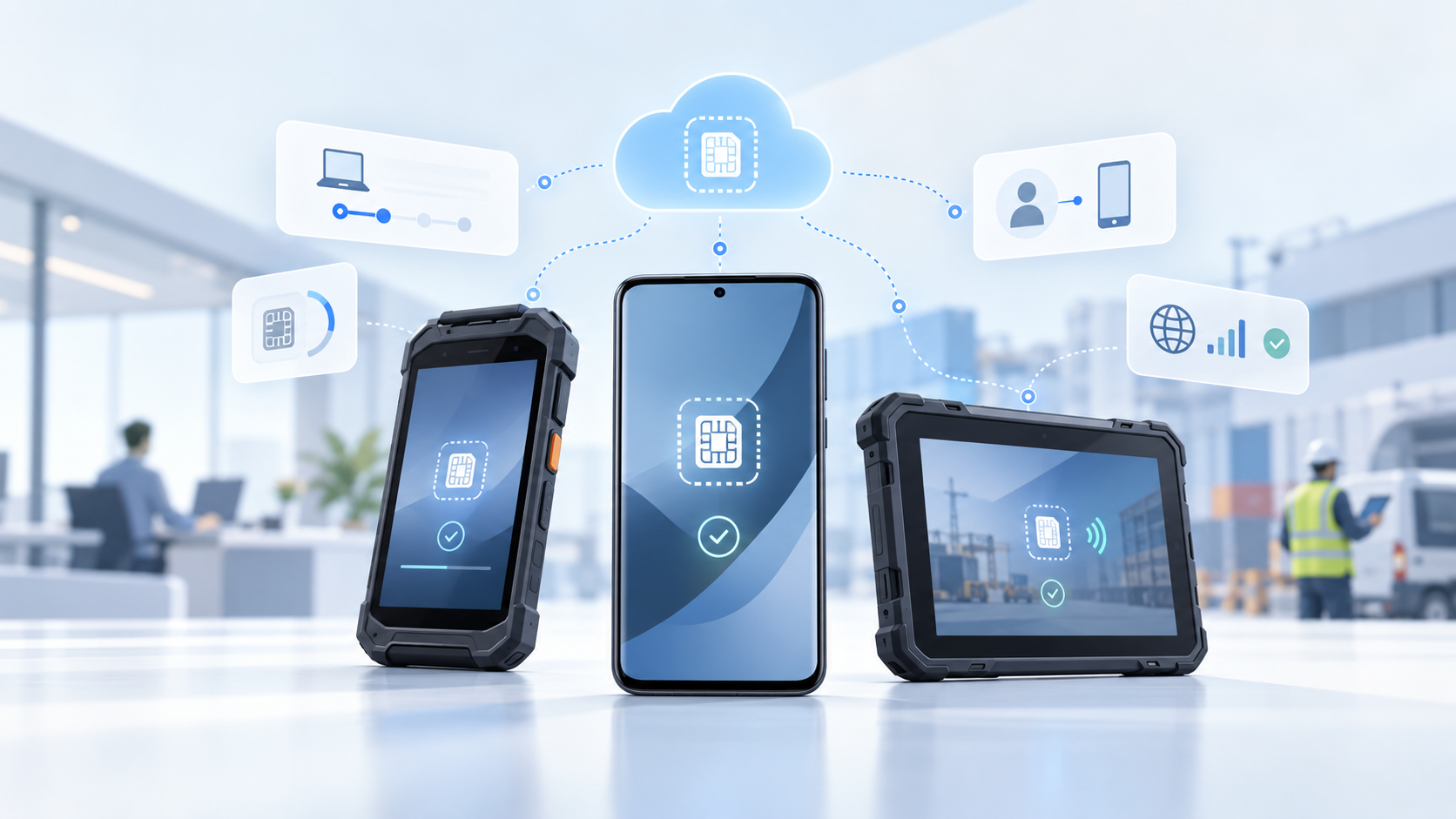
For a field technician, a work device is ready when it can open schedules, access customer information, and send reports from a job site. Behind that simple experience, the device’s connectivity still needs to be prepared.
Imagine a company assigning new technicians to several cities. Their devices have been shipped, work applications are installed, and their first customer visits are scheduled.
But some devices do not yet have a usable cellular connection. The operations team needs to make sure SIM cards are available, delivered to the right locations, and installed before the technicians start work.
As the number of devices grows, connectivity preparation can become a coordination task of its own. Who received each SIM? Which device uses it? What needs to happen when an assignment ends?
This is where eSIM for enterprises can help: by providing connectivity profiles digitally on supported devices, reducing the need to distribute physical SIM cards whenever a device needs a profile.
What Is eSIM for Enterprises?
eSIM allows a cellular service profile to be installed digitally on a compatible device. The profile contains the information needed to use an operator’s service. This approach to remote profile provisioning is described in the GSMA eSIM guide.
For enterprises, connectivity becomes part of device preparation. Teams can install a profile suited to an assignment and manage it throughout the device’s use.
With compatible devices, operator services, and a suitable management system, this process can be coordinated remotely. Users may still need to confirm an action on their devices, depending on platform and operator requirements.
Use Case: Preparing a Device for a Field Technician
Return to the technician about to start their first assignment.
The company has selected the device and the cellular service required for the job. The team obtains an eSIM profile from the operator and sends an installation command through its device management system.
When managing devices with Vanguard, the team can send commands to install or remove an eSIM profile on the selected device. For the technician’s device, the next step is to check that the intended profile is available and the connection works for the assignment.
The operational journey can look like this:
Prepare the device → Install the eSIM profile → Check connectivity on the device → Use it for work → Review it when the assignment ends.
Checking the connection remains an essential step. After a profile is installed, the team should verify that the device can access the applications and services required for work.
The device also needs an initial connection, such as Wi-Fi, to download the profile. Preparing the eSIM before the technician leaves is therefore useful when internet access at the destination may be limited.
Once the profile is available and connectivity has been checked, the technician can begin using the device for their tasks. If the device cannot connect, the technician and support team can check its profile, network coverage, and operator service before the assignment begins.
How eSIM Can Support Enterprise Operations
One practical benefit of eSIM for businesses is reducing the need to ship and physically install SIM cards for profile setup. For companies with devices spread across locations, this can simplify part of the logistics involved in preparing them.
It also supports a more consistent preparation process. Connectivity can become part of the device readiness checklist, alongside application installation and work access checks.
Managing eSIM profiles also gives teams a point to review how a device’s connectivity relates to its assignment. When a device changes hands, the team can check whether an existing profile is still appropriate or should be removed.
The practical value depends on how the company prepares its devices today. Where physical SIM delivery adds coordination work, digital profile installation can simplify that part of preparation. Teams still need a clear process for checking connectivity on each device before handing it over.
Enterprise eSIM Use Cases Across the Business
Onboarding New Employees
Device readiness can influence how smoothly an employee’s first day goes. An eSIM profile can be prepared during onboarding, making connectivity checks part of the handover alongside the device and its applications.
Logistics and Field Teams
Couriers, technicians, and sales representatives use devices to receive assignments, update progress, and communicate with colleagues. Digital profile provisioning can reduce the need to send physical SIM cards to their locations. Operator selection still needs to account for coverage in the areas where they work.
Retail and Branch Operations
For supported Android devices used in branches, cellular connectivity can provide an access option suited to each location. Where a business needs a backup connection, the configuration and testing of that arrangement must be planned separately.
Temporary Projects and Events
Exhibitions, surveys, and temporary locations often need devices for a defined period. An eSIM profile can be prepared for that assignment and reviewed when the activity ends, helping teams prepare the device for its next use.
Business Travel and Regional Assignments
For business travel, companies can consider profiles suited to the destination. Availability depends on device support, operator offerings, and plan terms. Costs and coverage should be checked before departure; using an eSIM does not, by itself, guarantee lower charges.
Offboarding and Device Reuse
When an employee returns a device, the company can review and remove profiles that are no longer needed. This supports preparation for the next user. Removing a profile from a device does not automatically cancel the operator subscription or stop billing; service cancellation needs to be handled separately.
Managing Connectivity Throughout the Device Lifecycle
An enterprise eSIM approach needs compatible devices, suitable operator services, management permissions, and a clear internal process. User confirmation requirements and the initial connection needed for installation should also be considered.
With those preparations in place, eSIM can become part of a more organized approach to managing work devices: from initial setup, through daily use, to return or reassignment.
Connectivity is one part of device readiness that needs to be prepared, checked, and managed according to the assignment the device is intended to support.